ABA Therapy and Early Intervention
What Is ABA Therapy? A Complete Guide for Singapore Parents of Children with Autism
By Hui Ling Loh, MA, BCBA – Clinical Director, Asia, ABC Center Singapore
Reviewed against 50+ years of clinical research in Applied Behavior Analysis
November 2026 | 6 min read

If your child has just been recommended for ABA therapy, you likely have two questions at once: What is it, exactly — and does it actually work? This guide answers both, in plain language, so you can make an informed decision without wading through jargon.
What Is ABA Therapy?
Applied Behavior Analysis (ABA) is a scientific, evidence-based approach to understanding and changing behavior. It is widely recognized as one of the most extensively studied behavioral approaches with clinically proven effective treatment to teach meaningful skills for autism spectrum disorder, using systematic, data-driven methods to teach communication, social, and daily living skills while reducing behaviors that get in the way of learning.
ABA is not a single technique but a framework, individualized for each child. It has been studied for more than 50 years, with thousands of peer-reviewed articles behind it, and is recognized by the American Academy of Pediatrics, the American Psychological Association, and the U.S. Surgeon General as an effective intervention for autism.
What is Autism?
Autism comes from “autos,” the Greek word for “self.” It is a lifelong, brain-based developmental condition that can affect how a person experiences and navigates their physical and social environment. (Autism Resource Centre, Singapore)
Autism is a spectrum, and every individual is unique, with their own strengths, abilities, and challenges. There is no single way to experience autism, just as there is no single profile that defines every person on the spectrum. Learn more about autism here.
How Does ABA Therapy Work?

Every well-implemented ABA program follows the same evidence-based structure, individualized to the child in front of it:
- Assessment first. A BCBA (Board Certified Behavior Analyst) evaluates your child's current skills and identifies specific goals — this becomes the baseline for measuring progress.
- Skills broken into steps. Complex tasks, like getting dressed, are taught as small, achievable steps rather than one overwhelming goal.
- Positive reinforcement. Desired behaviors are met with meaningful reinforcement — praise, a preferred toy, an activity — which increases the likelihood the child repeats them.
- Data, every session. Progress is tracked objectively at every visit. This is not guesswork: if a strategy is not working, the approach is adjusted based on what the data shows.
- Generalization. Skills are practiced across settings, people, and materials so they transfer to real life — not just the therapy room.
- Parent training. You are trained to reinforce strategies at home, because consistency between the center and your home is what makes progress stick.
Is ABA Therapy Safe — and is it the Right Approach?
Yes. This is a fair question, and one worth asking directly: some outdated criticism of ABA circulates online, with some reporting punishment-based methods.
To be clear, ethical, BCBA-supervised and well-implemented ABA requires prioritizing positive reinforcement and rewards that motivate the child to keep learning skills.
It is function-based and positive because your child isn’t misbehaving; they’re communicating an unmet need, and ABA teaches a better way to meet it.
“Your child isn’t giving you a hard time; they’re having a hard time explaining to you what they need. ABA can help your child develop more effective ways to communicate this to you.”
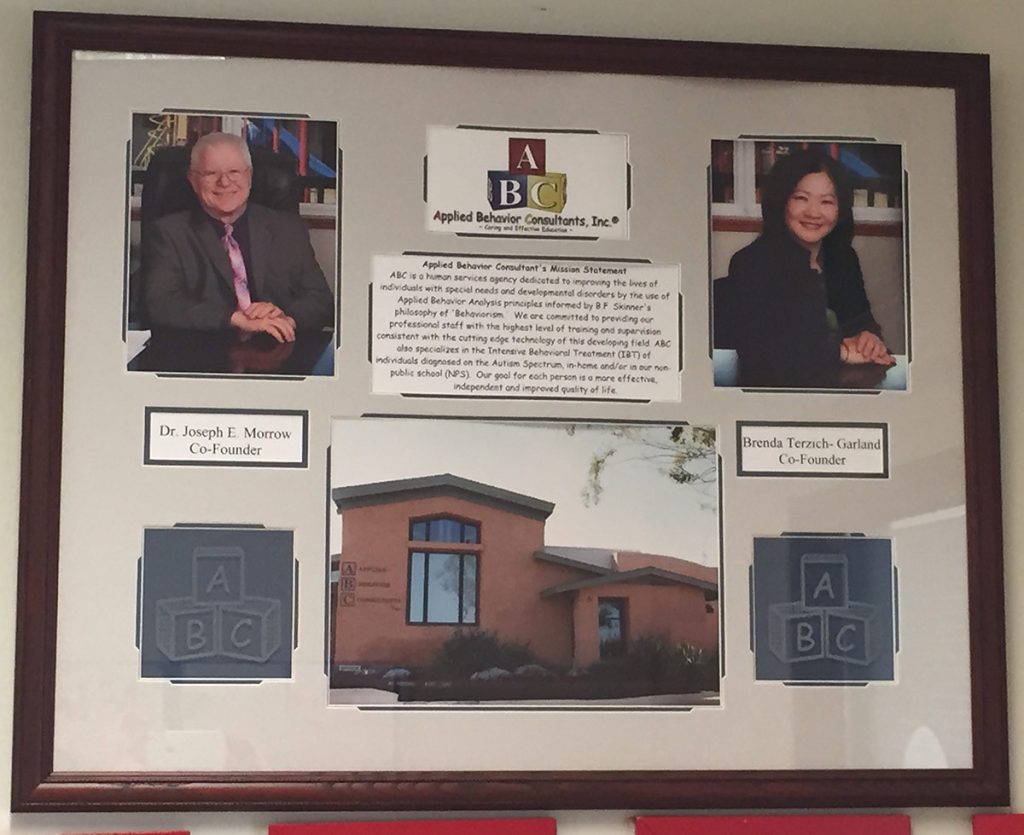
Applied Behavior Consultants (ABC) Center’s global clinical heritage has been at the forefront of ABA research from the very start, and until today. Dr. Joseph Morrow, Ph.D., BCBA-D, co-founder of Applied Behavior Consultant (ABC) USA, published his first paper on the behavioral treatment of autism in 1968. He was later recognized by the Association for Behavior Analysis International (ABAI) for outstanding contributions to the global dissemination of behavior analysis — the same clinical foundation ABC Center’s programs are built on.
Moving forward to today, ABC’s current global President and CEO, Brenda Terzich-Garland, M.A., BCBA, has created one of the latest and highly effective ABA generalization methods, recently published to serve as a guide for ABA practitioners globally.
Why Does Timing Matter? The Case for Early Intervention
This is the question that follows almost every diagnosis: Should we start now?
The evidence says yes, and the margin is significant. A landmark 1987 study by psychologist O. Ivar Lovaas found that 47% of children who received intensive early behavioral treatment achieved normal intellectual and educational functioning, compared with a small fraction of children in a minimally treated comparison group. A 2001 report from the U.S. National Research Council reached a similar conclusion: children should begin intensive intervention as soon as an autism spectrum disorder is recognized, because early educational intervention meaningfully improves long-term outcomes.
ABC Center’s results are likewise in line with the clinical evidence. In our ABC USA Infant/Toddler programme study, 100% of children made progress, with 56% achieving expected developmental gains in line with time spent in programme and 95% transitioning to a less restrictive environment after 3 years old.
of children in the Lovaas (1987) early-intervention group reached normal intellectual and educational functioning
of children transitioned to less restrictive environments after age 3
of children made progress in ABC Center’s programs
None of this means a later start closes the door. Progress at any age is real and worth pursuing. But the data is consistent: the earlier a child’s window opens, the more ground can be covered inside it.
What Is the R.E.A.L. Model?
Learning a skill in a therapy room and using it in real life are two different things — closing that gap is what we call generalization of skills. While many ABA practitioners intend to achieve generalization, ABC USA CEO Brenda Terzich Garland developed a more systematic 5-level generalization model called R.E.A.L. (Recreating Environments to Accelerate Learning).
This method is the expertise of ABC Center and is referenced in Behavior Analysis and Learning (Pierce & Cheney), a textbook used in BCBA training programs worldwide. R.E.A.L. enables a more structured generalization of skills from the therapy setting into home, school, and community life. Learn more about ABC Center Singapore’s approach.
Does My Child Need a Diagnosis to Start ABA?
No. A formal autism diagnosis is not required to begin.
If your child shows signs of developmental delay or is considered at risk of autism, starting early intervention even without a formal diagnosis is the recommended path. The intention of ABA intervention is to teach skills to children, and the earlier the child is taught, the easier it is for the child to learn. ABC Center’s Infant/Toddler Programme is designed for exactly this window, welcoming children from as young as 12 months.
Starting ABA Therapy in Singapore
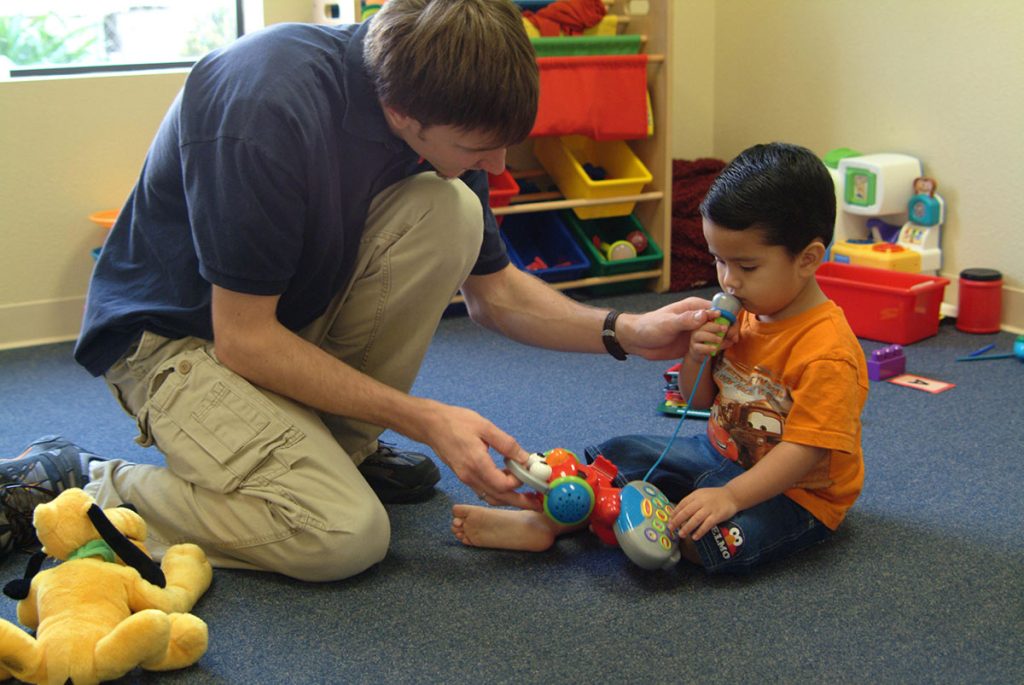
For Singaporean and Permanent Resident children aged 2 to 6, ABA intervention is available through the government-subsidized EIPIC-P programme, administered by the Early Childhood Development Agency (ECDA), with subsidy levels dependent on means-tested household income.
ABC Center Singapore has been an appointed EIPIC-P provider since the program’s inception in 2018. To understand how ABA fits into your child’s overall care, read more on our approach or schedule a free consultation with our team.
Frequently Asked Questions
Is ABA only for children with autism?
No. While ABA is most commonly used for autism spectrum disorder, it is also effective for ADHD, developmental delays, and other behavioral or learning challenges.
How many hours of ABA therapy does a child typically need?
Programs generally range from 12–15 hours a week, with intensive intervention going up to 36 hours a week. Your BCBA-supervised therapist will recommend the right intensity for your child.
How is ABA different from speech or occupational therapy?
ABA addresses behavior and learning across every domain — communication, social skills, cognition, and daily living — using data-driven teaching methods and is often used alongside speech and occupational therapy rather than instead of it.
Will my child be pushed too hard in an ABA session?
No. Sessions are individualized and reinforcement-based, not compliance-based. If a task is too difficult, it’s broken into smaller steps — the goal is consistent success, not pressure.
How long does ABA therapy typically last?
This varies by child. Some children need support for one to two years; others benefit from longer-term intervention. Progress is reviewed continuously, and therapy is adjusted as your child develops.
This article is intended for general informational purposes and does not replace individualized clinical advice. For a personalized recommendation, schedule a free, no-obligation consultation with our BCBA-supervised team.
Ready to Learn More?
Consistent with 50 years of scientific research, thousands of children in our care make progress each year.
Let’s discuss how ABA therapy can help your child thrive.
Sources & Further Reading
- American Academy of Pediatrics – (https://publications.aap.org/aapbooks/monograph/817/chapter-abstract/18027844/Evidence-Based-Supports-and-Services?redirectedFrom=fulltext)
- American Psychological Association – https://www.apa.org/about/policy/applied-behavior-analysis
- U.S. Surgeon General, U.S. Department of Health and Human Services – https://profiles.nlm.nih.gov/spotlight/nn/catalog/nlm:nlmuid-101584932X120-doc-
- Autism Resource Centre (Singapore) – What is Autism?
- Lovaas, O. I. (1987). Journal of Consulting and Clinical Psychology, 55(1), 3–9 – Behavioral Treatment and Normal Educational and Intellectual Functioning in Young Autistic Children
- National Research Council (2001). Washington, DC: National Academy Press – Educating Children with Autism
- Pierce, W. D., & Cheney, C. D. (Taylor & Francis) – Behavior Analysis and Learning: A Biobehavioral Approach, Sixth Edition
- Brenda Terzich-Garland (MA, BCBA), Founder of ABC USA – About the Author of the R.E.A.L. Model
- ABC Center Singapore Parent Resource Hub – EIPIC & EIPIC-P Explained: A Plain-English Guide
- Early Childhood Development Agency (ECDA) – Homepage
- American Academy of Pediatrics (2020, reaffirmed 2025) – Identification, Evaluation, and Management of Children With Autism Spectrum Disorder